Family stories
From Staying Home to Independent Living
For one family, the question was not whether their mother had "failed" at living at home. It was whether a quieter house still fit the life she wanted, and how to make a change with dignity, at her pace, and together.

She was doing fine, but home had grown too quiet
One daughter described her mother as capable, proud, and deeply attached to the home where she had raised her family. For a long time, staying there felt right. She knew the neighbors, had her routines, and liked being in her own space.
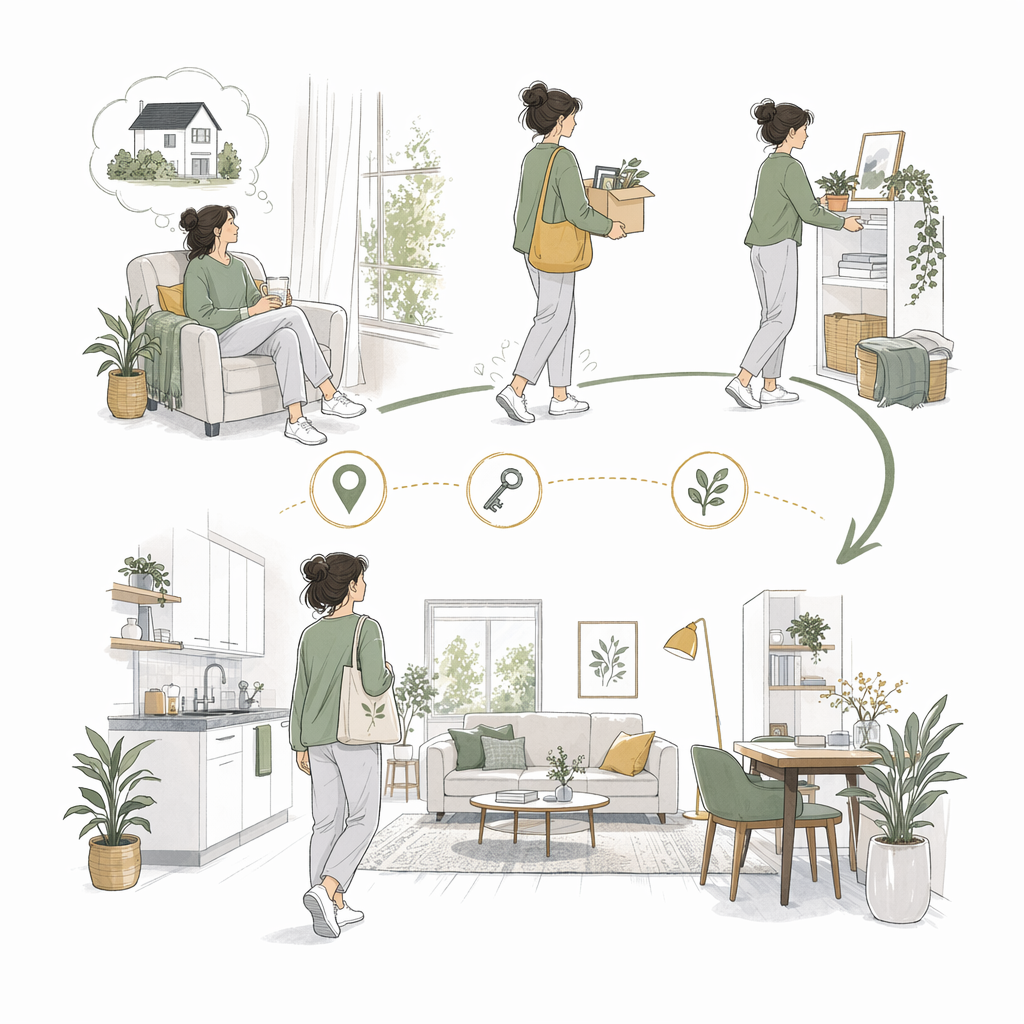
Over time, though, the days began to feel smaller. Cooking for one stopped being enjoyable. The house needed constant little tasks. Friends were farther away than they used to be, and seeing people often took more planning. Nothing was terribly wrong. It just was not as lively or easy as before.
That can be a hard moment for families to name. Many families first support a parent at home, and that is honorable and loving. In this family's case, the conversation slowly shifted from "How do we keep everything exactly the same?" to "What kind of daily life would feel good now?"
- She was not in a crisis
- The main issue was loneliness and too much home upkeep
- Her daughter wanted to protect her independence, not take it away
The first talks were emotional, and not always smooth
At first, the mother heard "senior living" and pictured losing freedom. Her daughter heard hesitation and worried she had brought up the topic too soon. They both cared about the same thing, but they were using different words.
So they tried a gentler approach. Instead of debating labels, the daughter asked about everyday life. Did her mother still enjoy shopping and cooking every day? Would it feel nice to walk downstairs for coffee and see familiar faces? What if she had her own apartment, but fewer chores and more company?
That changed the tone. The conversation became less about leaving home and more about choosing a lifestyle. They learned that independent living usually means a private apartment in a community, with meals, activities, transportation in some cases, and less home upkeep. It is meant for older adults who want more ease and connection. That felt very different from what they had first imagined.
Families who want help starting these conversations can find useful questions in guides for talking with your parent.
- They paused when talks became too tense
- They focused on preferences, not pressure
- They talked about daily routines, friends, meals, and freedom
They looked for signs of a good fit
Once the mother was open to exploring, the family made a short list of what mattered most to her. She wanted her own space. She cared about good food, a comfortable apartment, and chances to meet people without feeling forced into activities. She also wanted a place where she could speak in her own language at least some of the time, or feel welcomed by people who understood her background.
That gave the search more shape. They were not looking for "the best place" in some abstract way. They were looking for a community that fit her personality. Calm but not lonely. Friendly but not noisy. Independent, with support nearby if needed later.
They also learned the value of visiting with open eyes. A brochure can sound lovely, but a real visit shows whether residents seem at ease, whether common spaces feel active, and whether the atmosphere feels warm. The mother noticed things her children might have missed, like whether the dining room felt relaxed and whether the apartments felt private enough.
If your family is still sorting out the options, learn about living choices to compare independent living, assisted living, and continuing care in plain language.
- Private apartment and independence mattered most
- Meals and social connection were important
- Cultural comfort and language support mattered
- The parent joined the visits and gave her own opinion
Cost was part of the conversation, but not the only part
Like many families, they had practical questions. What would monthly costs look like? What was included? Would independent living actually simplify life, or just move expenses around?
They found it helpful to think in ranges, not promises. Independent living often varies widely depending on the city, the apartment, and what is included, such as meals, housekeeping, transportation, or activities. In many markets, monthly costs may range from around $2,500 to $6,500 or more. In higher-cost cities or larger apartments, the number can be higher. The real cost depends on the location, the floor plan, and the services included.
The daughter also compared those costs to what home was already taking: groceries, utilities, repairs, yard work, rides, and the hidden effort of managing everything alone. That did not make the decision automatic, but it made it more honest. They were comparing two lifestyles, not just two rent numbers.
Because families can feel overwhelmed by the search, some use free matching to narrow options based on location, budget range, language, and preferences. Willowbarrow is a free guide and matching service, not a senior-living provider, and the family always chooses.
- They asked what was included each month
- They compared community costs with the real cost of staying in the house
- They kept the focus on quality of life, not just a single number
The decision became easier when it stayed in her hands
The turning point was simple. The mother was invited to decide, not persuaded to surrender. Her children stopped saying, "You need to move," and started saying, "Let's see if any place feels like you." That difference mattered.
After a few visits, one community stood out because it felt natural to her. She liked that she could close her own front door, then step into a fuller day when she wanted. She imagined having breakfast with neighbors, joining an activity now and then, and not worrying about every task in the house.
Even then, the family moved slowly. They revisited questions, talked about what she would bring, and acknowledged the sadness that can come with leaving a longtime home. A hopeful change can still carry grief. Both can be true at once.
Stories like this remind families that there is no single "right" timeline. Some parents are ready quickly. Others need many conversations. You can read more family experiences in our stories.
- The parent stayed at the center of the decision
- A good move can still bring mixed feelings
- Going slowly helped everyone feel steadier
What changed after the move
No family story is perfect, and adjustment takes time. In this case, the biggest shift was not dramatic. It was daily life becoming less effortful and more connected. Meals were easier. There were people nearby. The mother had more small moments of company without needing her children to arrange every outing.
Her daughter also felt a different kind of relief. Not relief from her mother, but relief that her mother's world had opened up again. Their visits became less about chores and logistics and more about being together.
This will not be the right path for every family, and staying at home may remain the best choice for some. But for this family, independent living was not giving something up. It was choosing a new chapter with more ease, more community, and more room for the mother to enjoy her own life.
- The move brought more social contact and fewer household tasks
- Family visits felt more personal and less like a to-do list
- The choice supported independence rather than limiting it
This family's mother did not need rescuing, she needed a lifestyle that felt less lonely and easier to enjoy, and they found it by deciding together.
Common questions
How do we know if independent living is the right fit?
It may be worth exploring if your parent wants a more social, easier daily life with fewer home chores, while still living independently in a private apartment. The best fit depends on their personality, preferences, budget range, and location.
What if my parent says no at first?
That is common. Many parents need time, more information, and a chance to picture what daily life would actually feel like. Gentle, repeated conversations usually help more than one big talk.
How much does independent living usually cost?
Costs vary widely by city, apartment, and what is included. In many areas, independent living may range from about $2,500 to $6,500 or more per month, and the real number depends on the location, the floor plan, and included services like meals or housekeeping.
Is choosing senior living disrespectful to our culture or family values?
Not at all. Many families care for parents at home first, and that is deeply respected. For some families, a community setting becomes one good option among several, especially when it supports a parent's independence, comfort, and connection.