Free tool
The Gentle Downsizing Checklist for a Parent's Move
Helping a parent sort a home is emotional, practical, and deeply personal. This free checklist gives families a calm, room-by-room way to decide what to keep, share, donate, or let go before a move to a senior living community.
The Gentle Downsizing Checklist
A free, printable PDF you can keep and share with your family. No sign-up wall.
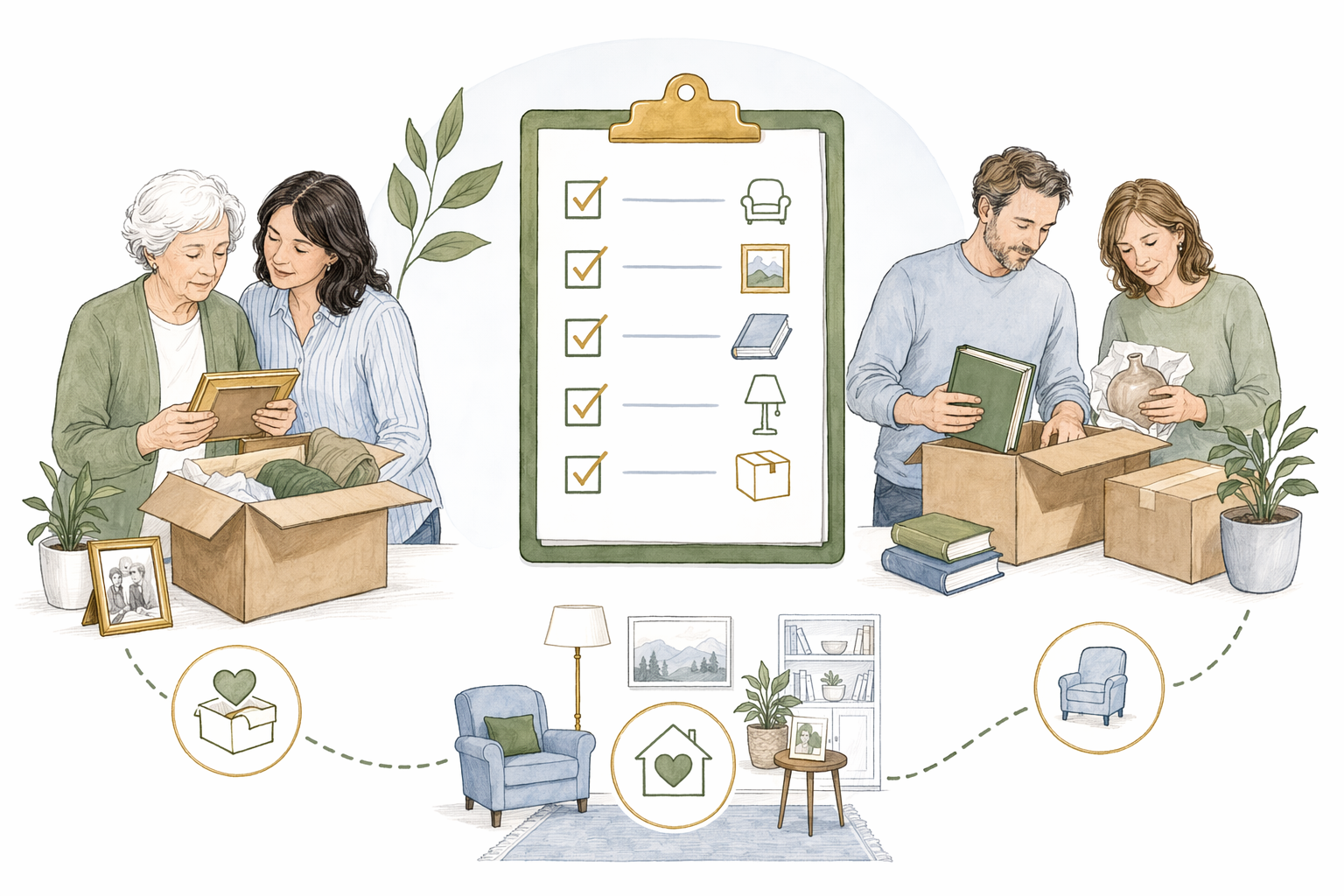
What this checklist helps with
A move to senior living often means bringing the most meaningful parts of home into a smaller, easier-to-manage space. Our downloadable checklist is designed to make that process feel steadier and more respectful, one step at a time.
It helps families think through each room, notice what matters most to a parent, and avoid last-minute decisions. Instead of asking, "How do we clear the house?" it helps you ask, "What does Mom or Dad want nearby for daily life, comfort, and joy?"
This tool is for planning and conversation. It is not a live calculator, and it does not replace your family's judgment. It simply gives you a clear way to organize choices and move at a gentler pace.
- Room-by-room prompts for common household items
- Simple categories like keep, give, donate, sell, store, or let go
- Space to note favorite furniture, photos, and daily-use items
- Helpful for independent living, assisted living, or continuing care moves
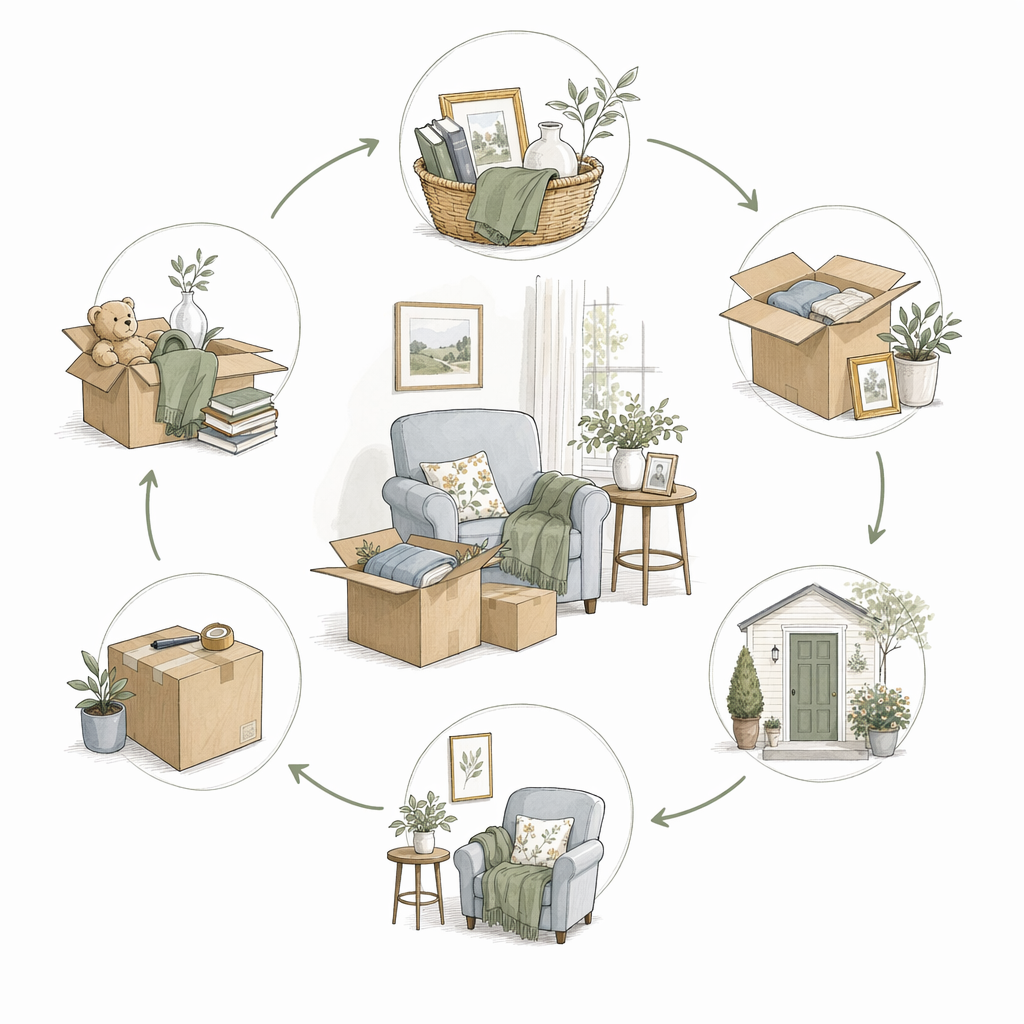
Start with your parent's new daily life
Before sorting boxes, picture your parent's next chapter. In independent living, a parent usually has a private apartment in a community with meals, activities, and less home upkeep. In assisted living, it is a similar community setting, with extra daily help available for things like dressing, bathing, and medications.
That picture can guide what comes along. A parent may not need three full sets of dishes, a garage of tools, or every piece of formal furniture. But they may deeply want a favorite chair, family photos, a warm blanket, books in their own language, or the small table where they drink tea each morning.
This is why the checklist begins with lifestyle, not stuff. When you know what the apartment may be like and how your parent wants to spend the day, decisions become kinder and easier. If you are still comparing options, explore living types first.
- Think comfort first, then storage
- Choose items used every week, not just once a year
- Make room for treasured objects and everyday routines
How to use the checklist without overwhelm
Try not to do the whole home at once. Pick one room, one shelf, or even one drawer. Short sessions are often better than marathon weekends, especially when memories are tied to many items.
As you go, use simple labels such as bring, family, donate, sell, store, and unsure. The "unsure" pile matters. It lets your parent pause without feeling rushed, and it keeps the conversation respectful.
If several relatives are involved, the checklist can help everyone stay on the same page. It gives the family a shared plan and reduces repeated questions. Willowbarrow is a free guide and matching service, not a senior-living provider, and your family always chooses what feels right. If you want help thinking through next steps, you can get matched or contact us here.
- Set a timer for 30 to 60 minutes
- Take photos of sentimental items before letting them go
- Write names on items promised to family members
- Leave paperwork sorting for a separate session
A gentle room-by-room approach
Most families find it easier to start in lower-emotion spaces like a linen closet, bathroom cabinet, or pantry. That builds momentum before moving into bedrooms, living rooms, and family keepsakes.
In each room, look for three things. First, what your parent uses now. Second, what will fit and function well in the new apartment. Third, what carries real meaning. Often, a few well-loved items matter more than many extras.
The checklist also reminds families to think about practical comfort. Enough everyday clothes. Shoes that are easy to wear. Favorite toiletries. Glasses, chargers, address books, framed photos, and simple kitchen items if needed. These small details help a new place feel familiar faster.
- Bedroom: favorite bedding, lamp, photos, daily clothing
- Kitchen: only the basics your parent truly uses
- Living room: one or two meaningful furniture pieces if they fit
- Bathroom: personal care items and easy-to-reach essentials
- Paper items: keep important contact lists and current household information together
What to keep, and what can be shared
Downsizing is not about throwing a life away. It is about choosing what still supports your parent's comfort, identity, and independence. A parent should have a real say in what stays close.
Many families use this move as a chance to pass special things to children and grandchildren. A serving bowl, a sewing box, holiday decorations, recipe cards, or a tool set may mean more when they are given with a story. The checklist includes prompts that make those conversations easier.
It also helps to remember that not everything must be decided in one week. Some things can go now. Some can go later. Some can be stored for a while if that gives everyone more peace. The goal is not perfection. It is a move that feels dignified and manageable.
- Let your parent choose the meaningful items first
- Invite family to take keepsakes by category, not by pressure
- Save the stories behind heirlooms when possible
Planning ahead for space and budget
A smaller home can also mean simpler monthly living, with fewer home repairs, chores, and surprise upkeep costs. Senior living costs vary widely, and the real number depends on the city, the apartment, the level of care, and what is included.
As a general range, independent living often starts around a few thousand dollars per month, while assisted living is often higher. Some continuing-care communities have an entrance fee plus monthly costs, while others do not. If budget is part of your planning, our checklist pairs well with this guide to cost and paying for senior living.
The checklist itself is free. It is meant to help you prepare, ask better questions, and make thoughtful choices at your own pace.
- Ask each community what furniture and appliances are included
- Measure large items before move day
- Compare monthly costs based on what is actually included
This free checklist helps your family sort a parent's home with less stress and more respect, one room at a time.
Common questions
When should we start downsizing before a move?
Earlier is usually easier, even if you begin with just one room. A gentle start gives your parent more say in the process and leaves space for thoughtful decisions.
What if my parent does not want to let things go?
That is very common. Start with easy areas, keep sessions short, and use an "unsure" category so nothing feels forced. The goal is to honor what matters most to your parent.
Should we put things in storage?
Sometimes, yes. Storage can be helpful for family heirlooms, seasonal items, or belongings your family is not ready to decide about yet. It can also give everyone more time to sort calmly.
Does Willowbarrow provide the move or the community itself?
No. Willowbarrow is a free multilingual guide and matching service for families, not a senior-living provider. We help you understand options, and your family makes the final choice.