Guides
When Is It Time for Senior Living? Signs Families Notice
There is rarely one dramatic moment when a family knows it is time to consider senior living. More often, the idea grows slowly, as you notice your parent may want more ease, more company, and less of the daily work of managing a home alone.
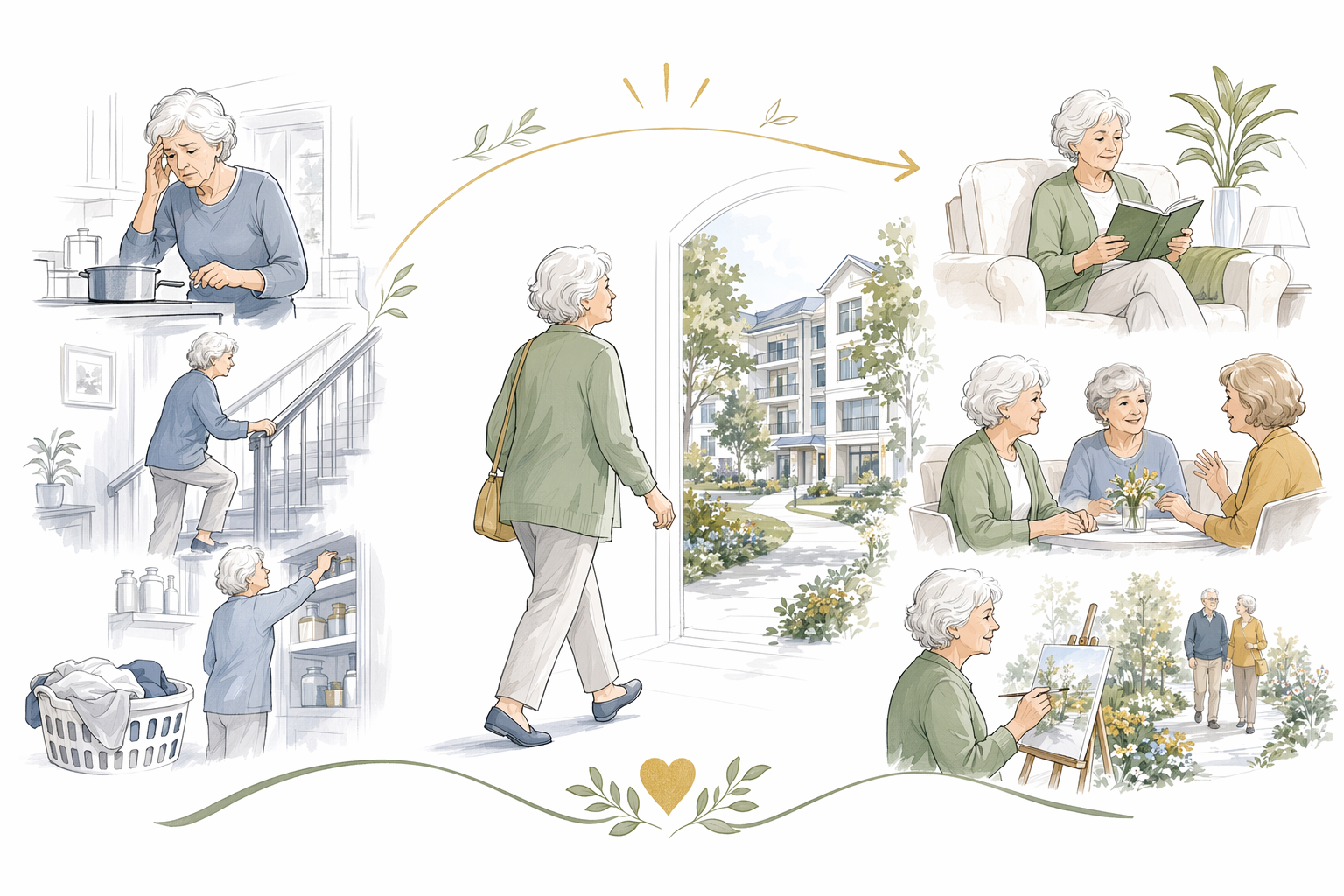
There is no single right time
Many families hope for a clear answer, but real life is usually more gradual than that. Your parent may still be doing many things well, while also feeling more tired by cooking, cleaning, driving, or keeping up with the house. That does not mean something is wrong. It may simply mean this stage of life calls for a different kind of support and community.
For some families, the question is not, "Can Mom or Dad stay home?" but "What setting helps them enjoy daily life more?" Senior living can be a positive lifestyle choice. It can mean meals with neighbors, activities, transportation, less home upkeep, and more freedom to spend time on the parts of life your parent still enjoys.
Many families care for parents at home first, and that is honored. Staying home can be the best fit for a while. A community can also be a good next step when home starts to feel more isolating, tiring, or hard to manage.
- A gradual change is still a real change
- Planning ahead is often calmer than waiting for a hard moment
- The goal is quality of life, not pressure
- Your parent's preferences matter most
Signs families often notice
Often, the first signs are practical. The house feels harder to keep up with. Groceries are not as easy to carry. Meals get simpler, or skipped. Driving feels stressful, especially at night or in bad weather. Small tasks begin to take more energy than they used to.
Social changes matter too. A parent who once enjoyed visits, worship, clubs, or regular outings may be spending more time alone. Friends may have moved away, stopped driving, or become less available. Even a very independent person can quietly become isolated when getting out of the house takes too much effort.
Sometimes families also notice that routines are less steady. Bills, appointments, laundry, or medications may be harder to keep organized. These changes do not define your parent. They are simply clues that daily life might feel smoother in a place where meals, activities, and some help are built in.
- Home upkeep feels like too much
- Cooking and errands are getting harder
- Driving less can mean seeing people less
- A parent seems bored, lonely, or less engaged
- Daily routines feel harder to manage
How to think about home versus a community
A good question to ask is, "Where does my parent seem most like themselves?" Some people truly feel happiest at home, with family nearby and familiar routines. Others begin to feel limited there, especially if the house has stairs, a lot of chores, or few chances to see other people.
Senior living is not one single thing. Independent living usually means your parent has their own apartment in a community, with meals, activities, and fewer household responsibilities. Assisted living is similar, but includes extra day-to-day help with things like dressing, bathing, and medications. Some families also look at continuing-care communities, where a parent can stay in one broader community as needs change over time.
It can help to compare the real day-to-day experience, not just the address. At home, who handles meals, rides, housekeeping, and social connection? In a community, what would your parent gain, and what might they miss? Looking at both sides calmly often makes the decision clearer.
- Think about daily life, not just location
- Compare chores, meals, rides, and social time
- Different communities fit different personalities
- The best choice supports dignity and independence
Why planning ahead can make things easier
Looking early does not mean you have to move soon. It simply gives your family time to learn, talk, and visit without rushing. That can be especially helpful if your parent likes to think things over, wants to involve relatives, or prefers conversations in a language they know best.
When families plan ahead, they can focus on lifestyle. Which neighborhood feels comfortable? Would your parent enjoy group activities, quiet spaces, or a community with residents from similar cultural backgrounds? Are shared meals a plus? Is transportation important? These are easier conversations when there is time.
If you are just starting, our guides and living options overview can help you understand the basics. You can also use this senior living questions checklist to compare communities at your own pace.
- Starting early gives your parent more voice in the process
- You can visit and compare without pressure
- It is easier to ask thoughtful questions when you are not rushed
- Language and cultural comfort matter
How to start the conversation with your parent
Try starting with curiosity, not conclusions. You might ask what feels easy lately, what feels tiring, and what kind of routine they want in the next few years. A calm conversation about preferences often goes better than a conversation that sounds like a decision has already been made.
It also helps to talk about what your parent values. Some people care most about privacy. Others want company, activities, or not having to cook anymore. Some want to be near family, a faith community, or people who share their language and traditions. Those answers can shape what kind of place feels right.
You do not need to solve everything in one talk. Many families have several smaller conversations over time. A respectful process gives your parent room to be heard and helps the whole family move forward with more confidence.
- Lead with questions, not pressure
- Listen for values, not just objections
- Short conversations can work better than one big talk
- Keep your parent at the center of the decision
What Willowbarrow can help with
Willowbarrow is a free, multilingual guide and matching service for families looking at senior living. We are not a senior-living provider, and we do not make the choice for you. Your family always chooses what feels right.
We can help you understand the differences between independent living, assisted living, and continuing-care options. We can also help you think through practical questions, such as location, language preferences, lifestyle, and general budget range. Matching is always free for families.
Costs vary widely by city, apartment type, level of care, and what is included. In many areas, independent living may start around the low thousands per month, while assisted living is often higher. In some cities, prices can be much higher. If you want a calm place to begin, you can get matched and explore your options step by step.
- Free matching for families
- Multilingual help is available
- You choose the community, if any
- Costs depend on the city, apartment, level of care, and included services
It may be time to explore senior living when home feels harder and your parent might enjoy more ease, more company, and a lifestyle that supports their independence.
Common questions
Is it wrong to look at senior living before we are sure?
Not at all. Learning early can make the whole process calmer and give your parent more say in what happens next. Looking does not commit you to a move.
What if my parent says they are not ready?
That is common. It may help to keep the conversation focused on lifestyle, like meals, friends, activities, and less home upkeep, rather than making it sound final. Often families revisit the topic a few times.
How do we know whether independent living or assisted living fits better?
A simple starting point is to look at daily routines. Independent living is for people who want community, meals, and fewer chores, while assisted living adds regular help with day-to-day tasks like dressing, bathing, and medications.
Does senior living always cost more than staying home?
Not always. The real comparison depends on your city, housing costs, food, utilities, transportation, home maintenance, and any outside help your parent uses. Community pricing also varies by apartment, level of care, and what is included.