Questions
What activities do senior-living communities offer?
Senior-living communities often offer much more than people expect. For many older adults, the biggest change is not just a new apartment, but a fuller daily life with neighbors, shared meals, and things to look forward to.
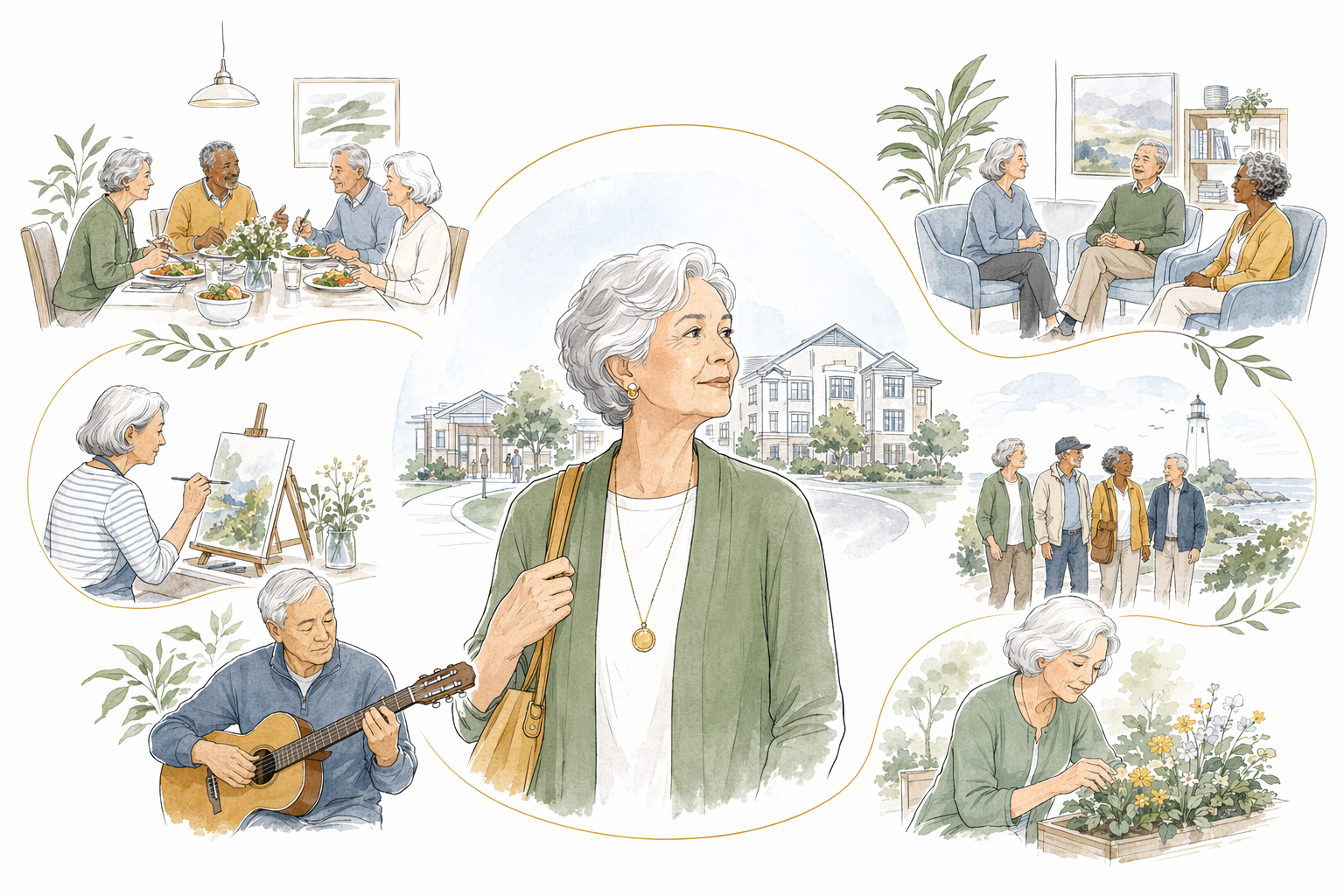
Activities usually start with everyday community life
Most senior-living communities build activities around ordinary pleasures that are easier to enjoy when home upkeep is lighter. Your parent may have access to group meals, coffee hours, movie nights, holiday gatherings, book clubs, walking groups, gardening, music, art, games, and simple outings around town.
Some communities keep the calendar busy from morning to evening. Others are quieter and more relaxed. The goal is usually choice, not pressure. A parent who loves being social may join several things a day. Someone more private may prefer one class a week, a quiet patio, and friendly hellos at dinner.
That is one reason families often explore senior living as a lifestyle choice. It can bring back small routines that feel good, like eating with others, having a place to go downstairs, or meeting people with similar life experience. If you are still learning the basics, how senior living works can help.
- Shared meals and coffee gatherings
- Games, cards, trivia, and movie nights
- Arts, crafts, music, and hobby clubs
- Seasonal celebrations and cultural events
Wellness and movement are often part of the week
Many communities offer gentle fitness and wellness activities designed for older adults. That may include stretching, chair yoga, balance classes, light strength work, dance, walking clubs, or water exercise if there is a pool. These are usually meant to help residents stay active and feel good in daily life.
You may also see classes that support routine and confidence, like meditation, breathing, journaling, or talks on healthy habits. In assisted living, activities are often adapted so people can join in comfortably at different ability levels.
A good community pays attention to participation, energy, and enjoyment. The question is not whether your parent will do everything. It is whether there are inviting options that match how your parent likes to spend the day.
- Chair exercise and balance classes
- Walking groups or garden strolls
- Dance, tai chi, or light yoga
- Relaxation and mindfulness sessions
Creative, social, and cultural programs can matter just as much
Activities are not only about staying busy. They help a parent keep parts of their identity that matter. A former teacher may enjoy discussion groups. A lifelong cook may like a baking demo. A parent who loves faith, music, poetry, or cultural traditions may feel more at home in a community that makes room for those interests.
This can be especially important for immigrant families. Many families first care for parents at home, and that is deeply respected. When a move is being considered, it helps to look for a place where your parent can hear their language, enjoy familiar foods, celebrate important holidays, or spend time with people who understand their background.
Some communities have multilingual staff or residents from many cultures. Others may offer language-specific events, worship services, visiting performers, or transportation to local cultural centers. If that matters to your family, it is worth asking directly. Willowbarrow can help families get matched with communities that fit their preferences, and the matching is always free.
- Book clubs and discussion circles
- Art, knitting, crafts, and music groups
- Holiday events and cultural celebrations
- Faith services or spiritual gatherings
There are often outings, convenience programs, and family events
Life in a community is not limited to the building. Many places plan outings to parks, stores, museums, restaurants, concerts, or local events. Some organize scenic drives, volunteer opportunities, or intergenerational programs with schools and neighborhood groups.
Communities may also offer practical programs that make daily life easier and more enjoyable. Think scheduled transportation, an on-site salon or barber, a small library, computer help, guest meals for family, or classes on using smartphones and video calls.
Family events can be a nice part of the rhythm too. Brunches, holiday dinners, cultural festivals, and open houses can give adult children and grandchildren an easy way to visit and share time together. That helps the move feel less like leaving life behind and more like starting a new chapter with support around it.
- Local outings and community trips
- Transportation for shopping or events
- Technology help and learning sessions
- Family meals and holiday gatherings
Activities can look different in independent living, assisted living, and continuing care
The calendar often depends on the type of community. In independent living, your parent usually has their own apartment in a community with meals, activities, and fewer home responsibilities. The activity schedule may feel similar to a friendly apartment community or club, with lots of optional social events.
In assisted living, the setting is similar, but there is also daily help available with things like dressing, bathing, and medications. Activities are still a big part of the lifestyle. They may simply be planned with more support and flexibility, so residents can join comfortably.
In a continuing-care community, sometimes called a community with multiple levels of living on one campus, activities may be shared across different parts of the community. That can give your parent continuity as needs change over time. You can explore different living options before deciding what feels right.
- Independent living often has a wide social calendar
- Assisted living usually includes adapted and supportive activities
- Continuing-care communities may offer shared campus events
How to tell whether the activities are actually a good fit
A full calendar looks nice on paper, but fit matters more than volume. When families visit, it helps to ask for a recent activity schedule and look beyond the brochure. Are people truly participating. Do residents seem comfortable and welcome. Are there both lively events and quieter spaces.
Try to picture your parent as a real person, not a category. Would they enjoy chatting before dinner. Do they need a community with faith services, gardening, music, or a strong cultural mix. Would they rather have low-key routines than constant group events. The best choice is usually the place where your parent can be themselves.
It is also fair to ask how activities are communicated, whether outings cost extra, and how new residents are introduced to others. If you want help comparing options, Willowbarrow is a free guide and matching service for families. You can start with help when you are ready.
- Ask to see a real recent monthly calendar
- Notice whether residents seem engaged, not just scheduled
- Look for options that match your parent's personality
- Ask about language, culture, and family-friendly events
Good senior-living communities give your parent more chances to enjoy daily life, with meals, neighbors, hobbies, outings, and routines that fit who they are.
Common questions
Do all senior-living communities offer the same activities?
No. Every community has its own style, size, and schedule. Some are very social and busy, while others are quieter, so it helps to compare calendars and visit in person if you can.
Are activities included in the monthly cost?
Many everyday activities are included, but that can vary. Some outings, special classes, salon visits, or guest meals may cost extra, and the total monthly price depends on the city, apartment, level of care, and what is included.
What if my parent is shy or does not like group activities?
That is common, and it does not mean senior living is a bad fit. Many communities offer a mix of quiet spaces, casual social time, and low-pressure activities, so your parent can join at their own pace.
Can families ask about language and cultural fit?
Yes, and you should. It is reasonable to ask whether staff speak your family's language, whether familiar foods are offered, and whether the community celebrates cultural or faith traditions that matter to your parent.