Questions
What does 'aging in place' mean in a community?
Aging in place in a community means your parent can stay in one familiar setting as life changes, instead of moving again and again. It is about comfort, relationships, and everyday support that can grow over time, not about giving up independence.
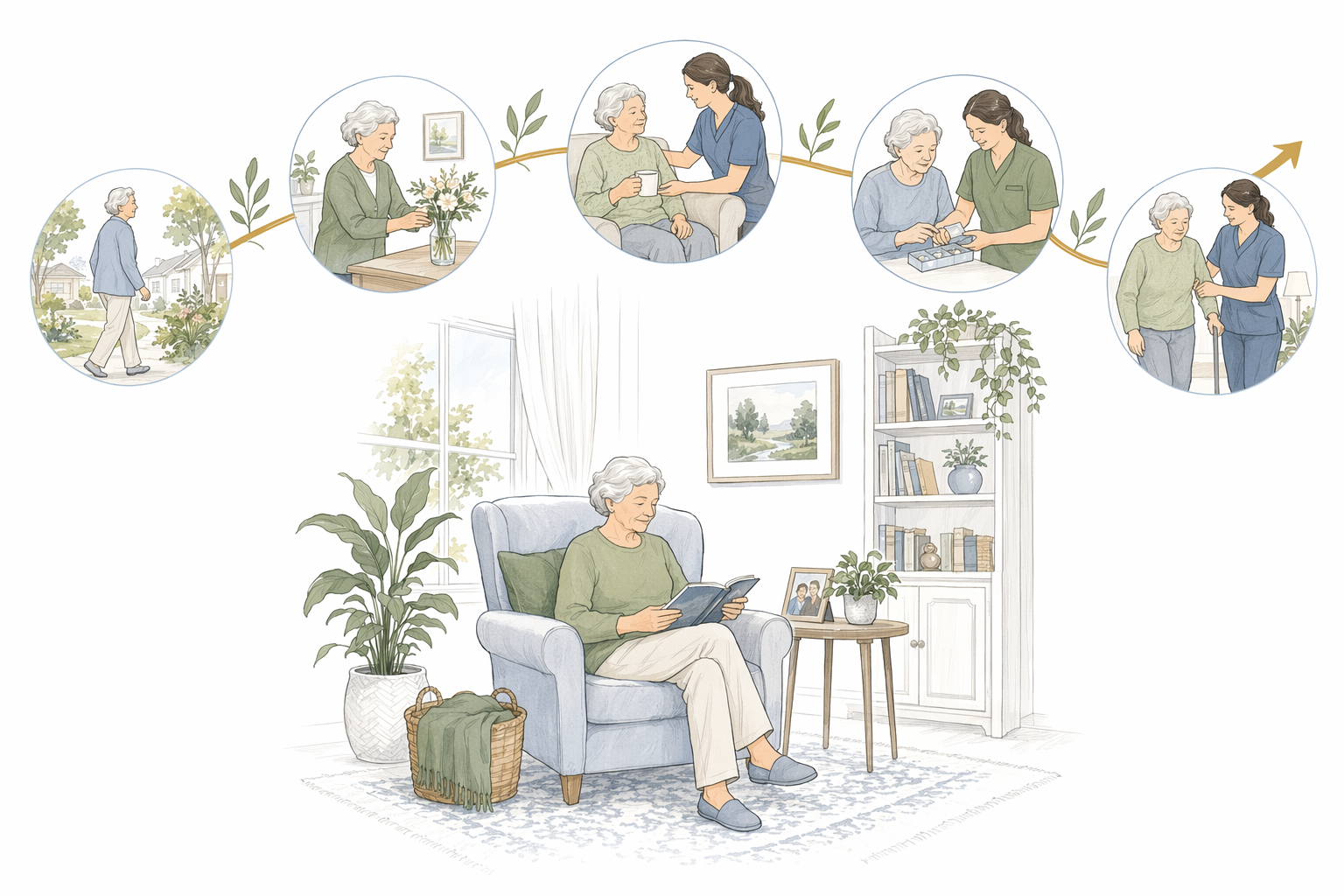
What the phrase means
When families hear "aging in place," they often think about staying in the same house. In a senior-living community, it usually means something a little different. Your parent lives in one community that can meet different needs over time, so they may be able to keep the same address, the same routines, and many of the same neighbors.
That can look different from one community to another. Some offer independent living, which means a private apartment in a social community with meals, activities, and less home upkeep. Some also offer assisted living, which is similar but includes extra daily help with things like dressing, bathing, and medications. A continuing-care community may offer several levels of living on one campus, so support can increase if needed.
The main idea is simple. Instead of making a big move every time life changes, your parent may be able to stay in a place that already feels familiar.
- One community, with support that may grow over time
- Fewer major moves for your parent and family
- A familiar apartment, team, and daily routine
- A lifestyle built around community, meals, and activities
Why families like this option
For many families, the biggest benefit is continuity. Your parent gets time to settle in, make friends, learn the layout, and enjoy everyday life without worrying as much about another move later. Familiar faces matter. So do favorite activities, shared meals, and a place that starts to feel like home.
Aging in place in a community can also make daily life simpler. There is often less home maintenance, less concern about yard work or repairs, and more chances to be around other people. That can support independence in a very practical way. Your parent still has their own preferences, routines, and privacy, but with community around them.
Many immigrant families tell us they want both dignity and flexibility. They may have cared for a parent at home first, and that is deeply respected. Sometimes a community becomes the next step because it offers connection, easier daily living, and support in a way that still honors the parent as a whole person.
- Staying near friends and familiar staff
- Less disruption as needs change
- More ease with meals, housekeeping, and activities
- A balance of privacy and community
What it can look like day to day
Day to day, aging in place often feels very normal. Your parent may have their own apartment, join neighbors for meals, take part in activities they enjoy, and spend time as they choose. Some people love exercise classes, music, gardening, language groups, or outings. Others simply enjoy not having to think about cooking every meal or keeping up a house.
If extra help becomes useful later, the community may be able to add it without turning your parent's life upside down. That might mean support with certain daily tasks, reminders, or a different apartment within the same community. The details depend on the community and what it offers.
This is why the phrase matters. It is not only about where a person lives. It is about keeping a sense of rhythm, identity, and belonging while getting the right amount of support at the right time.
- Your parent keeps a routine that feels like their own
- Social life and private time can both fit
- Support may increase without a completely new start
Questions to ask when a community says it offers aging in place
Not every community uses the phrase the same way, so it is smart to ask clear, everyday questions. For example, ask what levels of living are available now, and whether your parent could stay in the same apartment or would move to another area if they ever wanted more help. Ask what kinds of daily support are offered, and how that support is added.
You can also ask about practical details. What is included in the monthly price, and what may cost extra later? Are meals included? Housekeeping? Transportation? Activities? Since costs vary widely, the real number depends on the city, the apartment, the level of care, and what is included.
Families often want to ask about language and culture too, especially if a parent is more comfortable in a language other than English. It is okay to ask whether staff or residents speak your family's language, whether familiar foods are available, and whether holidays or cultural traditions are welcomed. If you want help preparing these questions, Willowbarrow offers free guidance through how senior living works.
- What living options are on site
- Whether support can be added over time
- What is included each month, and what may be extra
- Whether language and cultural preferences can be supported
- Whether your parent could stay in the same apartment or area
What aging in place does not guarantee
It is a helpful idea, but it is not a promise that every need can always be met in one exact apartment forever. Communities have different layouts, services, and policies. Your parent may be able to remain in the same community as needs change, but sometimes a different apartment or a different area of the community is part of that plan.
It also does not mean one option is right for every family. Some families prefer to continue caring for a parent at home. Others explore independent living first, then decide later whether assisted living or a continuing-care community fits better. There is no single correct path.
That is why it helps to compare options calmly and ask questions in plain language. Willowbarrow is a free matching and guide service, not a senior-living provider, and your family always chooses what feels right. If you want help finding communities that may fit your parent's preferences, language, and location, you can get matched or explore living options.
- It is not a guarantee of one exact apartment forever
- It can mean staying in the same community, even if the apartment changes
- Different communities offer different levels of support
- Your family always decides what fits best
How Willowbarrow can help
If the phrase still feels vague, that is normal. Senior living has a lot of terms, and many families are hearing them for the first time while also trying to do right by someone they love. Willowbarrow helps make the language clearer and the search more manageable.
We are a free, multilingual guide and matching service for families looking for independent living, assisted living, or continuing-care communities. We are not a community ourselves, and we do not tell you what to choose. We help you understand the options, ask better questions, and narrow the search to places that may fit your parent.
Some families come to us ready to tour. Others are just beginning and want a calm conversation. Both are welcome. You can learn more or ask for help at Willowbarrow Help.
- Free matching for families
- Help in clear, plain language
- Support for multilingual families
- A calmer way to compare options
Aging in place in a community means your parent may be able to stay in one familiar home-like setting, with support that can grow over time.
Common questions
Is aging in place the same as staying in your own house?
Not always. In a community, it usually means your parent may be able to stay in one familiar community as needs change, instead of moving to a completely new place each time.
Does every senior-living community offer aging in place?
No. Communities use the phrase differently. Some offer one level of living, while others offer independent living, assisted living, or more on the same campus.
Will my parent definitely never have to move again?
Not necessarily. Aging in place can mean staying in the same community, but sometimes a parent may move to another apartment or area within that community if they want more support.
Is aging in place more expensive?
It depends. Costs can range widely based on the city, the apartment, the level of care, and what is included, so it is important to ask what is covered now and what could cost extra later.
Can Willowbarrow tell us which community is best?
We can help you understand options and find communities that may fit your parent's preferences, but your family always makes the final choice. Matching and guidance are free for families.